News Data Breaches
Nikkei breached: hackers used stolen login to take 1.83 million records from cloud development service
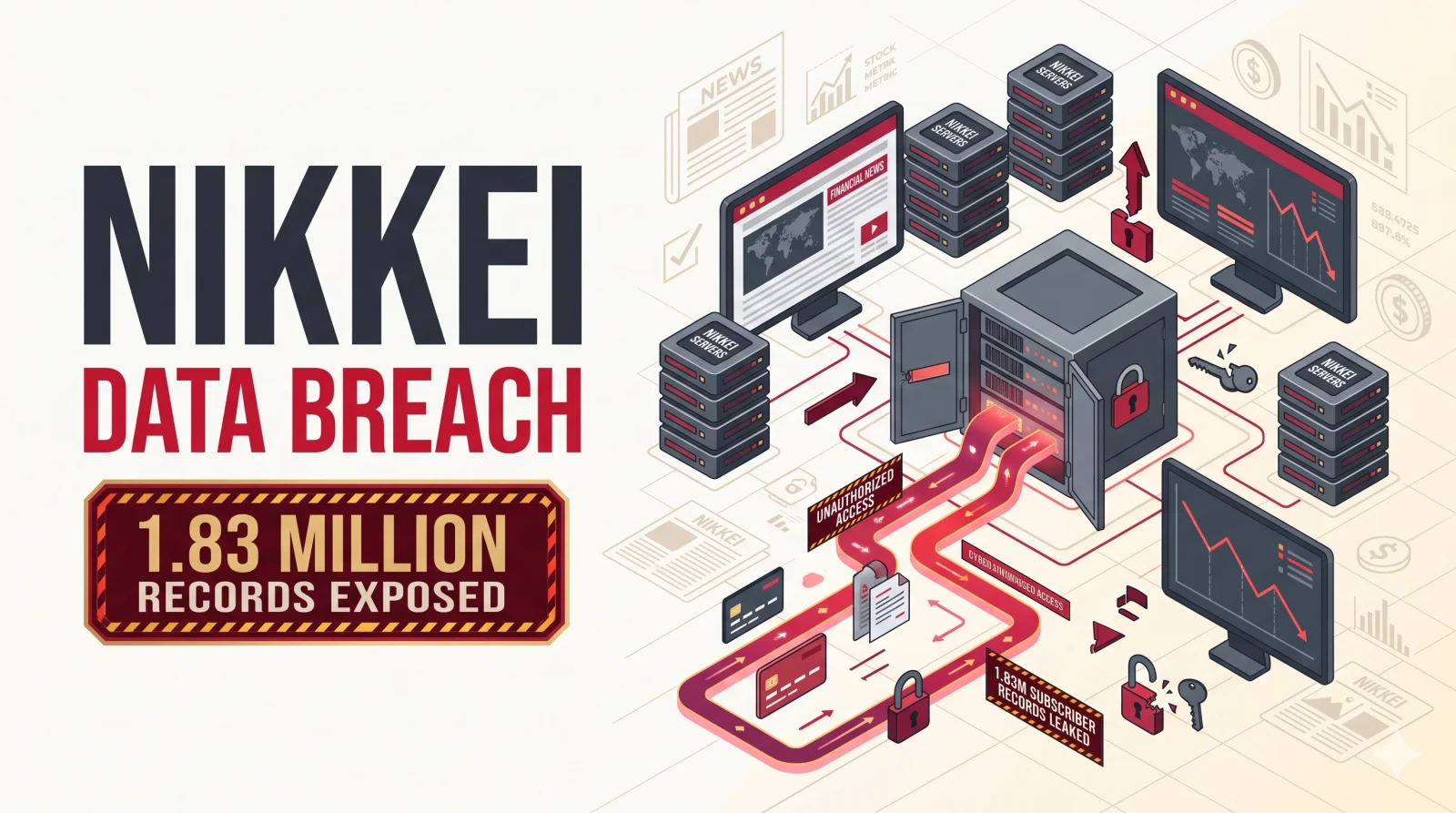
Japanese media group Nikkei says an attacker used login credentials obtained by unknown means to access a cloud service it uses for system development and take about 1.83 million records, about 150,000 of them containing personal information.
Key takeaways
- Nikkei says about 1.83 million records were taken from a cloud service it uses for system development.
- About 150,000 records contained personal information such as names, emails, addresses or phone numbers.
- The attacker used login credentials obtained by unknown means on 7 October 2026.
- No credit card information was involved, and no misuse had been found as of 16 October.
- Nikkei reported the breach to Japan's Personal Information Protection Commission on 11 October.
Nikkei Inc., the Japanese media group, has disclosed that an unauthorized party took about 1.83 million records from a cloud service it uses for system development. The company published the notice on 16 October 2026.
What happened? #
Nikkei says the access happened in the early hours to the morning of 7 October. The attacker logged in with credentials that were obtained by unknown means. Nikkei has disabled those credentials.
What data was taken? #
| Data | Approximate records |
|---|---|
| Total records leaked | 1.83 million |
| Records with at least one of name, email address, postal address, phone number or date of birth | 150,000 |
| Of those, records including an email address | 120,000 |
| Records with only data that cannot identify a person | 1.68 million |
Nikkei says no credit card information was involved.
Has the data been misused? #
As of 16 October, Nikkei says it had found no misuse of the leaked data and no system outages or data tampering. It reported the incident to Japan's Personal Information Protection Commission on 11 October and is still investigating the full scope and cause. Nikkei says it will contact each person whose data is confirmed to have leaked.
Nikkei has not said who was behind the attack.
What should Nikkei users do? #
- Watch for phishing emails or calls that mention Nikkei or use your personal details.
- Do not click links in unexpected messages claiming to be about the breach; go to Nikkei's support site directly.
- Change your password if you reuse your Nikkei password elsewhere.
What can other organizations learn? #
The attacker needed only a working login. Development and test environments often hold copies of real data, so enforcing multi-factor authentication, removing unused credentials and keeping personal data out of development systems would reduce the damage from similar attacks.
Sources
- Nikkei notice on personal information leak, Nikkei Inc.
- Hackers steal 1.8 million records from Nikkei, SecurityWeek
Questions this raises
- Was payment card data stolen?
- No. Nikkei says no credit card information was involved.
- How did the attacker get in?
- Using login credentials obtained by unknown means. Nikkei has disabled them.
- Will affected people be told?
- Nikkei says it will contact each person whose data is confirmed to have leaked.